

Jewelry turns skin green because the base metal underneath contains copper — usually brass or a copper alloy — and copper reacts with sweat, skin oils, and air to form greenish copper salts that rub off onto the skin. This happens most often on gold- or silver-plated jewelry once the thin plating layer wears away and exposes the copper base metal beneath it. Genuine 304 or 316L stainless steel jewelry doesn’t cause this reaction because its composition contains no significant copper and instead relies on a self-protecting chromium oxide layer.
For Amazon, Etsy, and Shopify sellers, this single chemistry fact is usually the root cause behind “why did my customer’s skin turn green” complaints — and it’s a sourcing problem, not a manufacturing defect the seller can fix after the fact.
The Real Mechanism: Copper Oxidation, Not “Sensitive Skin”
Most green-skin complaints get blamed on the customer’s skin chemistry, but the actual cause is almost always the metal. Base-metal alloys like brass are typically 60–70% copper combined with zinc, and copper is chemically reactive: it oxidizes on contact with moisture, oxygen, and the mild acids in sweat and skin oils, forming copper salts — the same greenish compound known as verdigris on old copper pipes or statues.
Those copper salts are water-soluble and transfer directly onto the skin, producing the telltale green ring under a ring, bracelet, or necklace. This isn’t an allergic reaction — it’s a chemical reaction between skin moisture and an unprotected copper alloy, and it can happen to almost anyone if the metal underneath is copper-based.
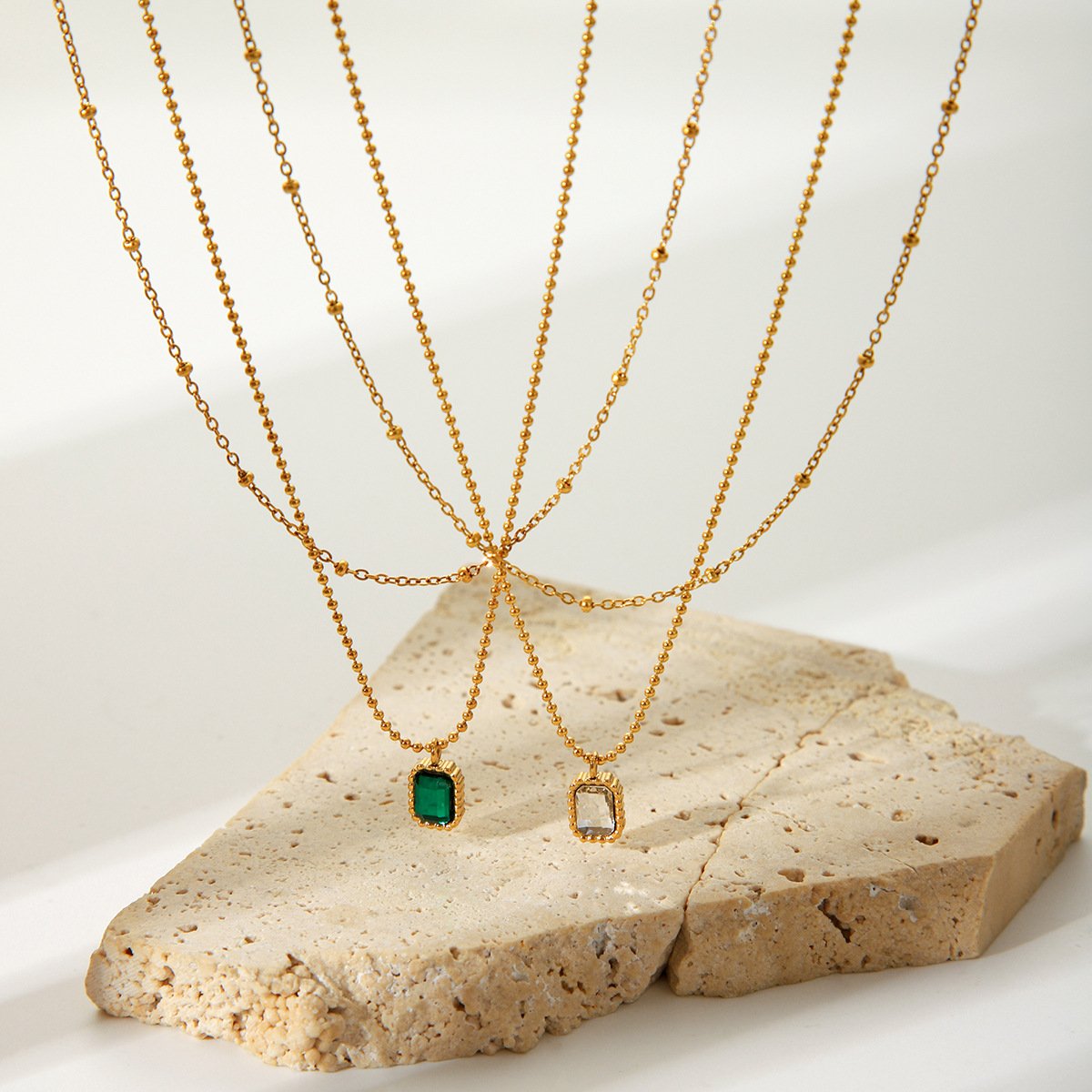
Why “Gold-Plated” or “Silver-Plated” Doesn’t Mean Tarnish-Proof
Plating is a thin metal coating applied over a base metal — it is not the base metal itself. Standard electroplating layers are extremely thin and typically wear through within weeks of regular contact with skin, water, or lotion, exposing the copper or brass underneath. Once that happens, the plating can’t be “repaired” — the base metal is now permanently exposed at that wear point, which is why cheap plated jewelry so often turns skin green within a month or two of purchase.
By contrast, PVD (Physical Vapor Deposition) vacuum plating — the coating process MFCHIC uses for its 18K Gold and Rose Gold finishes — bonds at a molecular level and holds its color for 1–2+ years under normal wear. But the coating type only matters if the base metal underneath is also safe, which is why grade transparency matters more than plating technique alone.
Base Metal Alloys vs. Stainless Steel: Side-by-Side
| Factor | Brass / Copper Alloy (Base Metal) | 304 Stainless Steel |
|---|---|---|
| Copper content | High (often 60–70%) | Not a primary component |
| Composition | Copper + zinc | ~18% chromium / 8% nickel |
| Oxidation risk | High — reacts with sweat/oils | Very low — chromium oxide layer resists reaction |
| Relies on plating to look “safe” | Yes — copper is always exposed once plating wears | No — the metal itself is corrosion-resistant |
| Water resistance | Poor once plating wears | Excellent — withstands water exposure without tarnishing |
| Maintenance | Requires care to avoid wear-through | Soap and water is sufficient |
Why Stainless Steel Doesn’t Turn Skin Green
304 stainless steel is an austenitic alloy composed of roughly 18% chromium and 8% nickel — no copper is part of its core composition. The chromium content forms a thin, self-repairing oxide layer on the metal’s surface that resists the oxidation reaction responsible for green-skin marks, tarnish, and corrosion.
This is a structural property of the metal itself, not a coating that can wear off — which is the fundamental difference from plated base-metal jewelry. MFCHIC, a 304 stainless steel jewelry manufacturer with 18 years of export experience, uses 304 as its primary material across the majority of its catalog precisely because this corrosion resistance holds up under everyday wear, water exposure, and repeated use without special care.
For sellers whose products may see prolonged exposure to saltwater, chlorine, or swimming, MFCHIC also carries a dedicated 316L stainless steel collection, which adds molybdenum and higher nickel content (10–14%) for even greater corrosion resistance in marine environments. Both grades share the same fundamental advantage over copper-based base metals: no reactive copper in the alloy, and no protective layer that wears away over time.
What This Means for Amazon, Etsy, and Shopify Sellers
If your store gets “my skin turned green” or “the plating came off and it looks discolored” complaints, the issue is very likely the base metal under the plating — not a one-off defect. Switching to solid 304 stainless steel styles removes this failure mode at the material level, since there’s no copper layer waiting to be exposed.
This is a sourcing decision you can test cheaply before committing. MFCHIC’s in-stock MOQ is 10 pieces per style, and styles/categories can be mixed freely in one order — so a seller can swap a handful of frequently-returned SKUs for 304 stainless steel equivalents and compare complaint rates directly. MFCHIC holds over 6,000,000 SKUs in stock across necklaces, bracelets, earrings, rings, pendants, and sets, so most storefronts can find a direct style match.
How to Vet a Supplier’s Material Claims
“Stainless steel look” and “genuine stainless steel” are not the same claim. Ask suppliers directly whether the item is solid 304/316L stainless steel or a plated base alloy, and request compliance documentation to back it up.
Reputable factories should be ISO 9001:2015 certified and able to confirm REACH compliance (EU Regulation (EC) No 1907/2006) and RoHS compliance (EU Directive 2011/65/EU) on request. Certificates are typically issued in PDF format upon request, with any fee confirmed in your Proforma Invoice rather than quoted upfront — a supplier’s willingness to document material grade is a stronger signal than marketing language alone.
FAQ
Q: Why does my jewelry turn my finger or neck green?
A: The metal underneath is almost always a copper-based alloy like brass. Copper reacts with sweat, skin oils, and air to form greenish copper salts that transfer onto skin — especially once any gold or silver plating on top has worn through.
Q: Is turning skin green a sign of an allergy?
A: Not usually. It’s a chemical reaction between copper in the base metal and moisture/oils on skin, not an immune response. True metal allergies (often nickel-related) cause redness or itching rather than green discoloration.
Q: Does stainless steel jewelry ever turn skin green?
A: Genuine 304 or 316L stainless steel jewelry does not turn skin green, because neither alloy contains copper as a primary component. The chromium in both grades forms a protective oxide layer that resists the oxidation reaction responsible for green marks.
Q: How can I tell if a jewelry item is solid stainless steel or just plated?
A: Ask the supplier directly and request compliance documentation. Reputable manufacturers can confirm the base alloy and provide REACH/RoHS compliance information; vague answers or reluctance to specify the base metal is a warning sign.
Q: Will gold-plated jewelry eventually turn skin green?
A: If the base metal underneath is brass or another copper alloy, yes — once the plating wears through, the exposed copper oxidizes. PVD-plated stainless steel holds color longer (1–2+ years under normal wear), and the base metal itself won’t oxidize even after the coating eventually wears.
Q: What’s the minimum order to test stainless steel alternatives to my current SKUs?
A: In-stock MOQ is 10 pieces per style, and styles/categories can be freely mixed within one order — practical for testing replacement SKUs against your top complaint-generating items without a large commitment.
Next Step
If green-skin complaints are showing up in your reviews or return requests, the fix starts at the material level. Browse MFCHIC’s 6,000,000+ SKU catalog of 304 and 316L stainless steel styles, add your test items to the Inquiry Cart (10 pcs/style minimum), and submit your inquiry — MFCHIC, a stainless steel jewelry manufacturer with 18 years of export experience and ISO 9001:2015 certification, will follow up with a Proforma Invoice within 1 business day.
👉 Browse the catalog: mfchic.com
📱 WhatsApp: +86 17727314167