
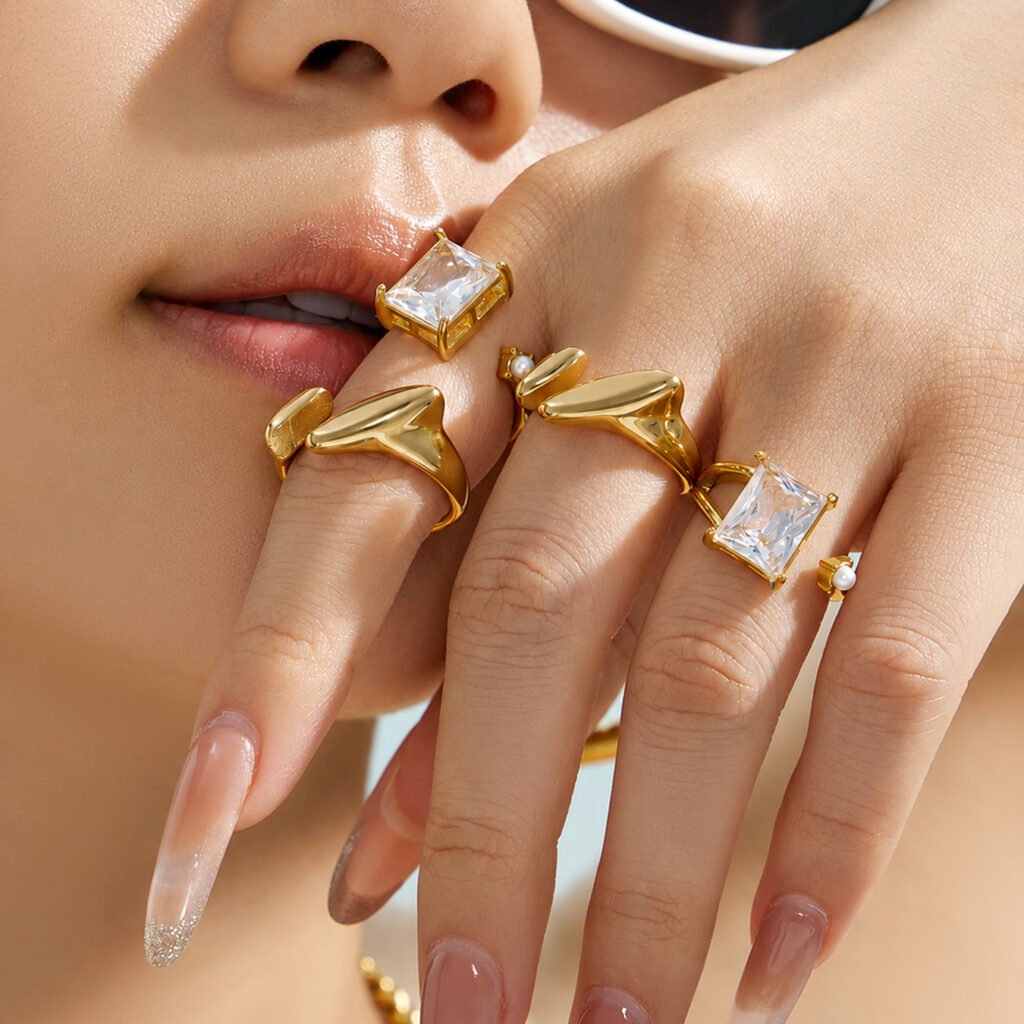
Stocking layered jewelry for wholesale means sourcing coordinated necklace, ring, and bracelet sets in varying chain lengths and finishes that customers buy together to create a stacked look. MFCHIC, a 304 stainless steel jewelry manufacturer with 16 years of export experience and 6,000,000+ SKUs in stock, supplies the style depth needed to build full layering sets at a 10-piece-per-style MOQ.
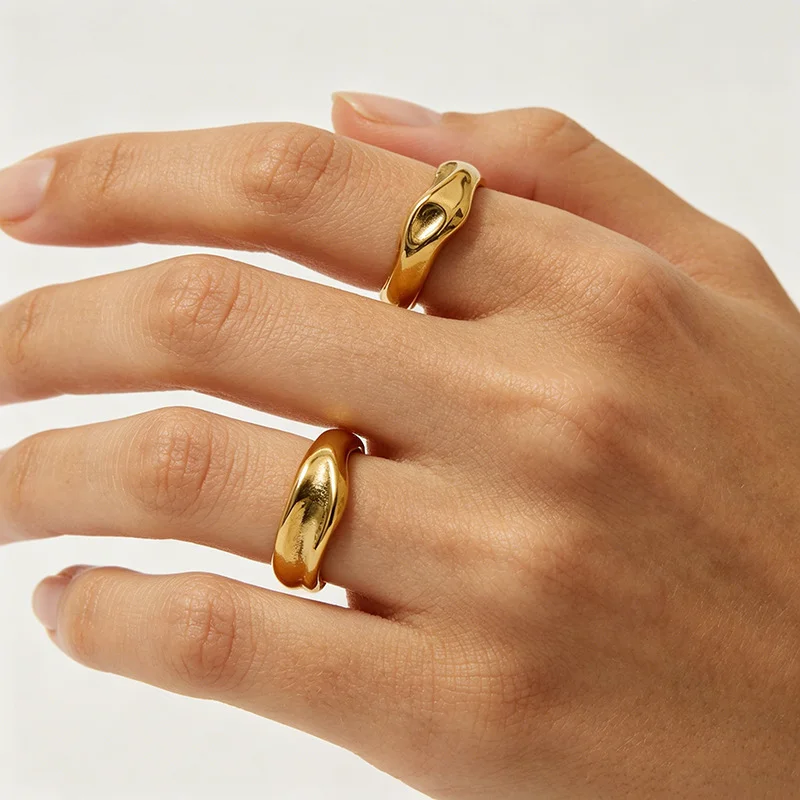
Why the Layering Trend Is a Wholesale Opportunity, Not Just a Style Trend
Layering is fundamentally a multi-item purchase behavior — a customer buying a layered look typically buys 2-4 pieces in one transaction instead of one. For wholesale buyers, that translates directly into a higher average order value (AOV) per end customer without needing to raise per-unit prices.
The Retail Math Behind Layering
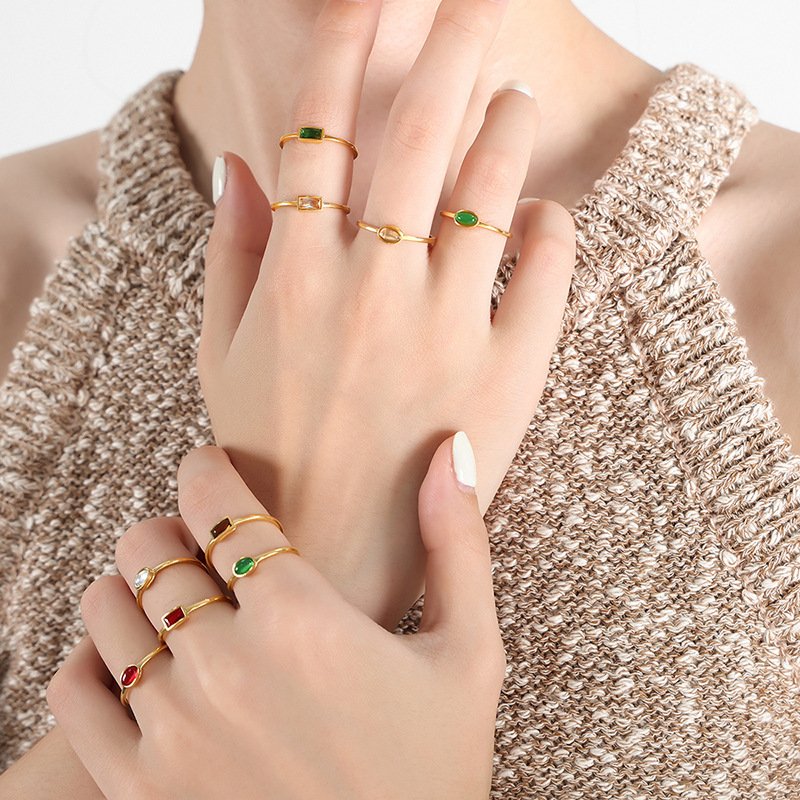
A single layered necklace set (3 chains at varying lengths) or a stacked ring set (3-5 rings) sells as one merchandising unit but consists of multiple SKUs. Retailers who stock complementary chain lengths, finishes, and ring widths from the same supplier can bundle and cross-sell without sourcing from multiple vendors.
What Makes a SKU “Layering-Ready”
Not every design works for stacking. Three technical factors determine whether a piece performs well in a layered set:
1. Consistent finish across chain lengths — mismatched plating tones between “matching” pieces are one of the most common customer complaints in layered sets.
2. Coating durability under friction — layered chains rub against each other during wear, so PVD gold and rose gold coatings need to hold up to metal-on-metal contact, not just single-piece wear.
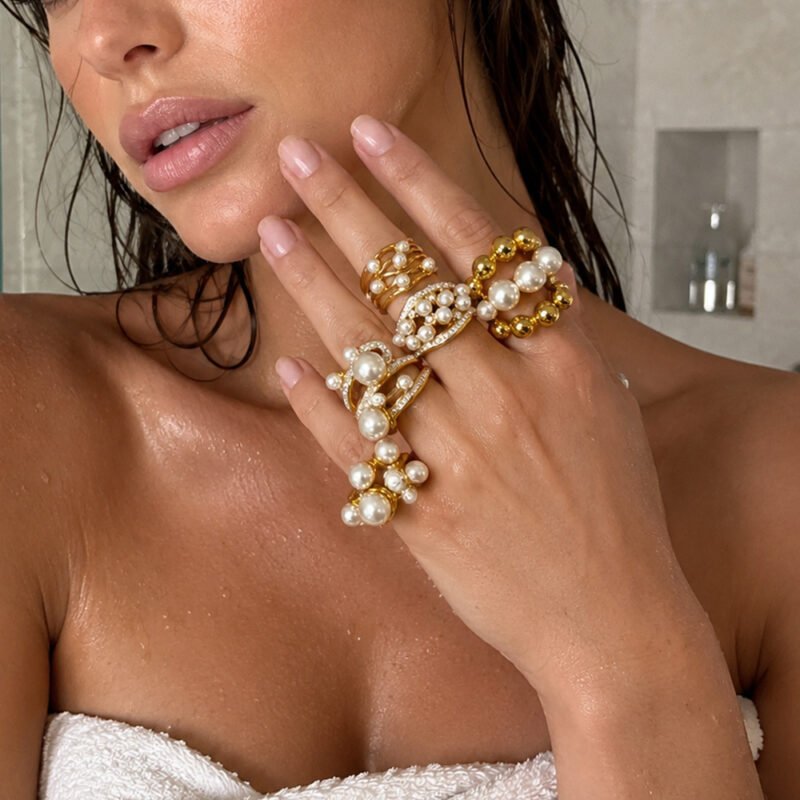
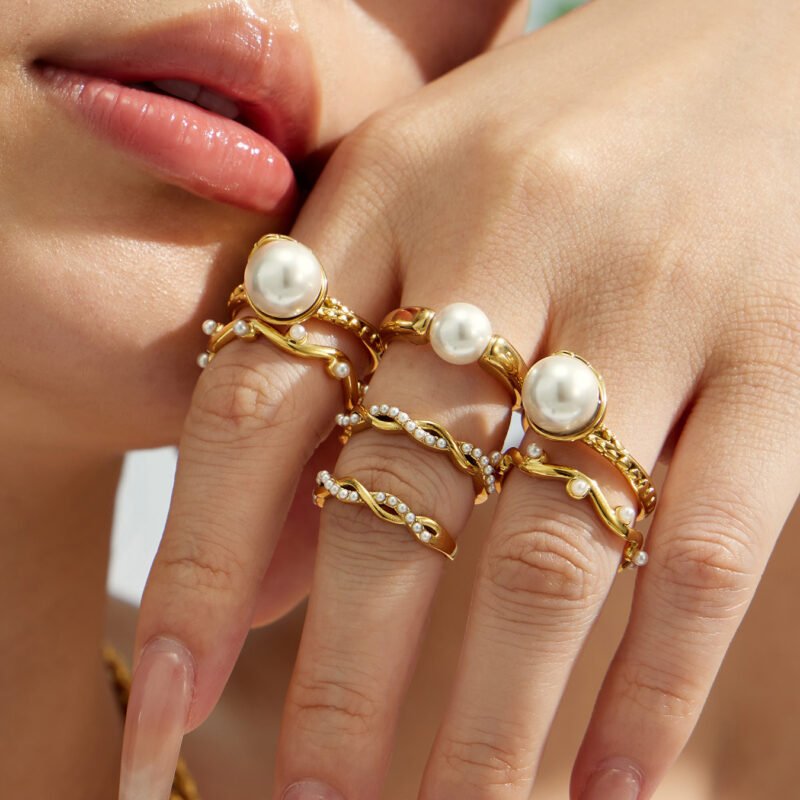
3. Weight and thickness variation — a proper stack needs at least one delicate chain, one mid-weight chain, and one statement piece to avoid a flat, same-weight look.
Comparison Table: Single-Piece Sourcing vs. Layering-Set Sourcing
| Factor | Single-Piece Sourcing | Layering-Set Sourcing (MFCHIC) |
| Units per customer purchase | 1 | 2-4 (bundled set) |
| Finish consistency need | Low | Critical — must match across SKUs |
| MOQ per style | Varies by supplier | 10 pieces per style |
| Category mixing | Often restricted | Necklaces, rings, bracelets freely mixed |
| Material | Often single-grade | 304 SS (primary) + 316L available |
Building a Layering Assortment: Category Mix Strategy
A balanced layering assortment typically spans three categories stocked together:
- Necklaces — at least 2-3 chain lengths in the same finish, priced $1.2-$5.0 per style.
- Rings — stackable bands and thin statement rings sold as sets, priced $0.5-$2.5 per style.
- Bracelets/Bangles — mixed-width bangles or chain bracelets for the wrist-stacking equivalent, priced $0.9-$4.0 per style.
Because MFCHIC allows unrestricted mixing of styles and categories within one order at a 10-piece MOQ per style, retailers can build a full layering assortment — necklaces, rings, and bracelets together — in a single inquiry rather than placing separate orders with separate minimums.
PVD Coating: Why It Matters More for Stacked Pieces
PVD Coating: Why It Matters More for Stacked Pieces
Layered pieces experience more friction and skin contact per wear than single pieces, which accelerates wear on lower-quality plating. MFCHIC’s PVD (Physical Vapor Deposition) vacuum plating process on 304 stainless steel is engineered for 3-5 years of color retention even under this higher-friction use case, reducing the fading complaints that can undermine a layering-set reputation.
Testing a Layering Line Without Overordering
Retailers new to layering sets should start with a small test batch — 3-5 coordinated styles per category (necklace, ring, bracelet) at the 10-piece MOQ — before committing to a full seasonal assortment. This mirrors the same low-risk test-and-scale approach used for single-SKU sourcing, just applied to a coordinated set.
Common Mistakes When Building a Layering Line
Common Mistakes When Building a Layering Line
Retailers new to stacking assortments tend to repeat three avoidable errors:
1. Mismatching finishes within a “set.” A necklace, ring, and bracelet marketed as a coordinated stack must share the exact same plating tone — customers notice a slightly warmer or cooler gold between pieces immediately, especially in close-up product photography.
2. Stocking only one weight class. A stack made entirely of delicate chains or entirely of statement pieces looks flat rather than intentional. The most successful layering sets combine at least one thin chain, one mid-weight piece, and one statement anchor piece.
3. Treating layering as a single SKU instead of an assortment. Layering sells through cross-merchandising — displaying and listing pieces together — not through a single “3-in-1 set” SKU alone. Retailers get the most AOV lift by keeping pieces as individual SKUs that are marketed together, so customers can also buy a replacement or an extra piece later.
Merchandising Layering Sets for Higher AOV
Beyond sourcing, how a layering assortment is presented drives the AOV lift. Product photography showing 2-3 pieces worn together (rather than each piece alone) and “complete the look” cross-sell prompts at checkout are the two highest-leverage merchandising tactics for converting single-piece browsers into multi-piece buyers.
Compliance Considerations for Layered Jewelry
Because layered pieces involve extended skin contact across multiple points of wear, buyers targeting the EU or sensitive-skin market segments sometimes ask about material compliance. MFCHIC’s factory is ISO 9001:2015 certified and REACH and RoHS compliant; compliance certificates are available upon request as PDF files, with any fee confirmed in your Proforma Invoice.
Frequently Asked Questions
Q: What categories should I stock together for a layered jewelry line?
A: A balanced layering assortment combines necklaces (multiple chain lengths), stackable rings, and mixed-width bracelets or bangles in the same finish family, so customers can build a coordinated stack.
Q: Does layered jewelry need to be the same material throughout?
A: Not necessarily, but finish consistency matters more than material grade. 304 and 316L stainless steel pieces can be mixed in one order as long as the plating finish matches visually.
Q: What MOQ applies to building a layering assortment?
A: MFCHIC’s in-stock MOQ is 10 pieces per style, and styles across necklaces, rings, and bracelets can be freely mixed within a single order to build a full layering set.
Q: How durable is PVD coating on stacked/layered pieces?
A: MFCHIC’s PVD vacuum-plated 18K gold and rose gold finishes are designed for 3-5 years of color retention, including under the higher friction exposure typical of layered wear.
Q: Can I test a layering line with a small order before committing to a full assortment?
A: Yes. A test batch of 3-5 coordinated styles per category at the 10-piece MOQ is a common entry point before scaling to a full seasonal layering assortment.
Q: Do layered jewelry sets require compliance certificates?
A: Not by default, but buyers targeting the EU market or sensitive-skin positioning can request REACH/RoHS PDF certificates, with any applicable fee confirmed in the Proforma Invoice.
Q: What price range should I expect for a full layering set?
A: Individual pieces typically range from $0.5 to $5.0 depending on category, meaning a 3-4 piece layered set can be assembled at wholesale cost well under $15 per set before markup.
Next Steps
Browse MFCHIC’s in-stock necklace, ring, and bracelet categories at mfchic.com, select coordinated finishes across categories, and add them to your Inquiry Cart (10 pcs/style minimum). Submit your inquiry to receive a Proforma Invoice within 1 business day.
📱 WhatsApp: +86 17727314167
📧 Email: info@mfchic.com