
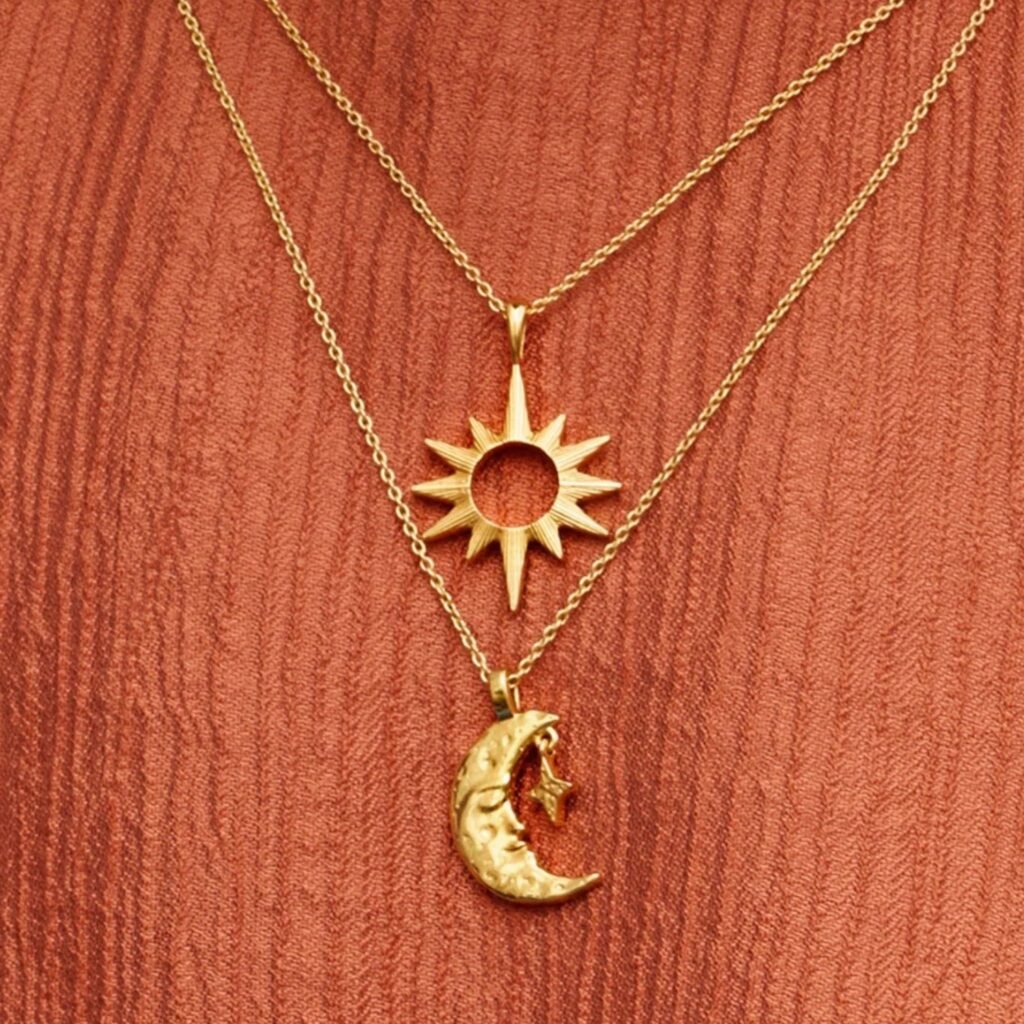
No — genuine 304 or 316L stainless steel jewelry does not rust in humid or tropical conditions, because both grades form a stable chromium-oxide layer that resists moisture-driven corrosion. The returns and complaints sellers see in humid markets almost always trace back to base-metal alloys mislabeled as “steel,” or plating that wears through and exposes an unprotected metal underneath — not to genuine stainless steel itself.
For sellers shipping into Southeast Asia, the Gulf, or coastal U.S. markets, humidity-related return complaints are a real cost center, but the fix starts with sourcing verified grade and finish, not switching categories. Below is what actually happens to stainless steel jewelry in high-humidity, high-salinity air, and how to source against it.
Why Humidity Drives Jewelry Returns
Humid and coastal air carries higher moisture content and, in salt-air regions, airborne chloride particles — both accelerate corrosion in metals that lack a protective oxide layer. Combined with sweat (itself a mild electrolyte) in year-round hot climates, this creates near-constant exposure conditions that low-grade alloys cannot withstand.
This is where most “cheap jewelry turned my skin green” or “rusted after one week” complaints originate: base metals like brass or copper, sometimes electroplated, corrode rapidly once moisture reaches the underlying metal. Genuine stainless steel does not share this failure mode, which is why grade verification — not material category — is the real return-rate lever for humid-market sellers.
How 304 Stainless Steel Performs in Humid Conditions
304 stainless steel (18-8 grade) is composed of approximately 18% chromium and 8% nickel. The chromium forms a passive, self-repairing oxide layer on the metal’s surface, which is what gives 304 its resistance to tarnish, corrosion, and rust under everyday humid and wet conditions.
For everyday wear in hot, humid climates — daily sweat exposure, monsoon-season air, tropical showers — 304 maintains its shine and structural integrity without special maintenance. Cleaning with soap and water is sufficient; no polishing or protective coating reapplication is required. This is a meaningful sourcing advantage for sellers who need consistent product performance without adding after-sale care instructions.
| Material | Humidity/Moisture Resistance | Salt-Air/Marine Resistance | Typical Failure Mode |
|---|---|---|---|
| 304 Stainless Steel | Excellent | Good | Rare; requires prolonged extreme exposure |
| 316L Stainless Steel | Excellent | Superior (adds molybdenum) | Very rare, even in marine settings |
| Base-metal alloy (unverified) | Poor | Very poor | Rust, green skin staining, plating failure |
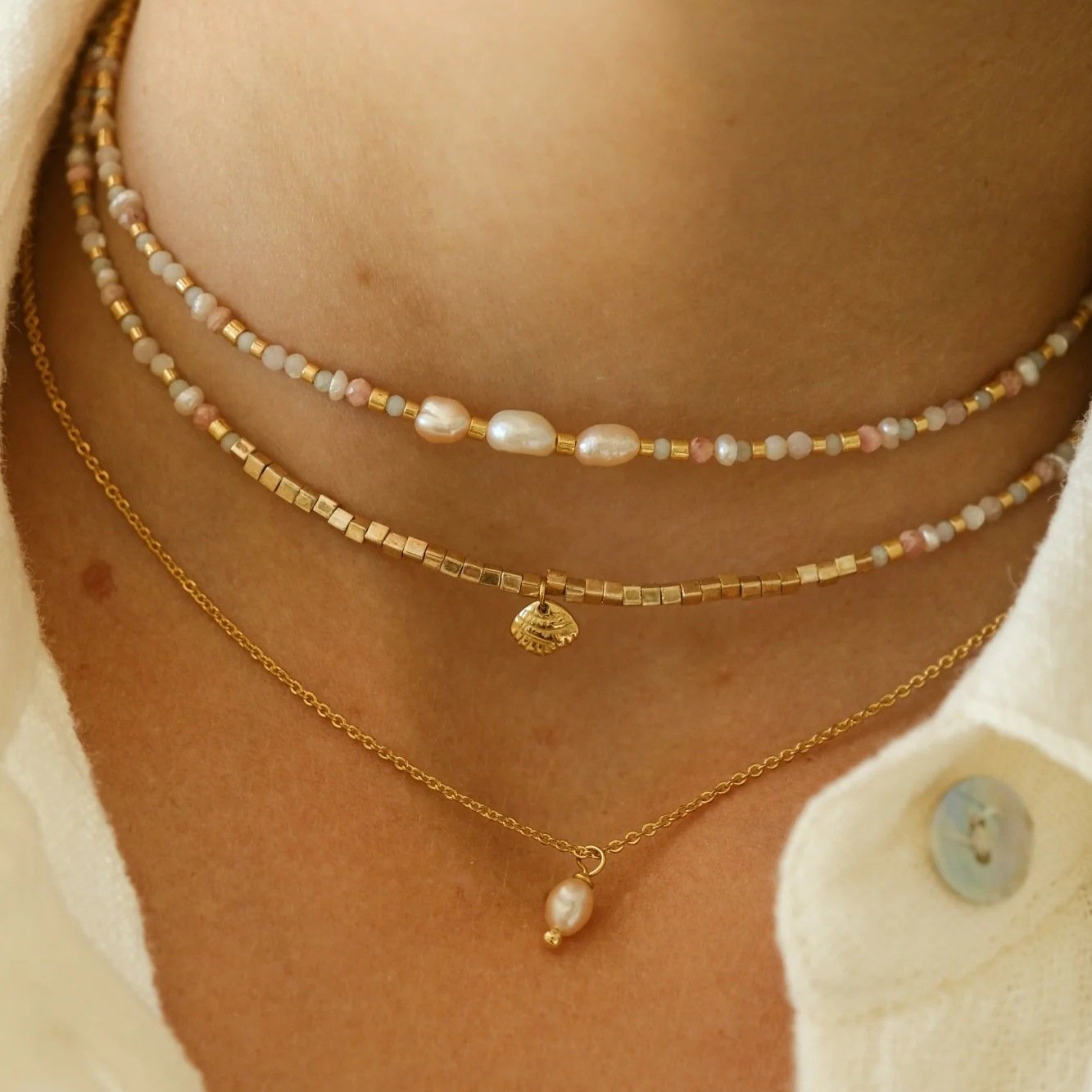
Does PVD Gold Plating Fade in Humid Weather?
PVD (Physical Vapor Deposition) vacuum plating is the finish MFCHIC, an ISO 9001:2015 certified stainless steel jewelry manufacturer, uses for 18K gold and rose gold tones over stainless steel, and it behaves very differently from traditional electroplating in humid conditions. Because PVD bonds at a molecular level rather than sitting as a thin surface layer, it holds color retention of 1–2+ years even under repeated humidity and moisture cycling.
Traditional electroplated finishes, by contrast, are thinner and more prone to wearing through — once that happens, whatever base metal sits underneath is directly exposed to moisture, which is the real source of most “gold jewelry turned dull/rusty” complaints in humid markets. When sourcing for climates with consistently high humidity, confirming PVD (not standard electroplating) as the finish method is one of the highest-leverage questions a buyer can ask a supplier.
When 316L Is Worth Specifying for Coastal Markets
304 stainless steel comfortably handles humidity and everyday sweat exposure, but 316L stainless steel — which adds molybdenum and 10–14% nickel — is the better-suited grade for prolonged saltwater or chlorine exposure. This matters specifically for beach-lifestyle brands, swim/dive-adjacent product lines, or retailers in Gulf and Southeast Asian coastal cities where customers may wear jewelry in the ocean or pool, not just in humid air.
For a general fashion catalog sold into humid but non-marine conditions (most tropical retail and Amazon/Etsy storefronts), 304 remains the practical default — it covers the vast majority of everyday wear scenarios at a more competitive price point. 316L is worth adding selectively as a labeled sub-collection for customers explicitly seeking marine-grade durability, rather than replacing a 304-based assortment outright.

Sourcing Checklist to Cut Humidity-Related Returns
Before adding a new stainless steel SKU line for a humid or coastal market, confirm the following with your supplier:
- Exact grade — request written confirmation of 304 or 316L, not a generic “steel” or “alloy” description
- Plating method — PVD vacuum plating outperforms standard electroplating in humid/moisture-heavy conditions
- Compliance documentation — REACH (EU Regulation (EC) No 1907/2006) and RoHS (EU Directive 2011/65/EU) compliance is available on request, with any certificate fee confirmed in your Proforma Invoice
- Factory consistency — a supplier with ISO 9001:2015 certification indicates a documented quality process, reducing the risk of inconsistent alloy composition between production batches
MFCHIC, a 304 stainless steel jewelry manufacturer with 18 years of export experience, applies this same grade and finish consistency across its 6,000,000+ SKU catalog, supported by 200+ skilled workers producing 5,000+ pieces daily for 3,000+ brands worldwide — giving humid-market sellers a deep, verified-grade catalog to test against local return rates before committing to volume.
FAQ
Q: Does stainless steel jewelry rust in tropical or humid weather?
A: No. Genuine 304 or 316L stainless steel forms a chromium-oxide layer that resists rust under humid, sweaty, or tropical conditions. Rust complaints almost always trace back to base-metal alloys mislabeled as steel, not to verified stainless steel grades.
Q: Will gold-plated stainless steel jewelry fade faster in humid climates?
A: It depends on the plating method. PVD vacuum-plated gold finishes hold color retention of 1–2+ years even under humidity, while thinner traditional electroplating wears through faster and exposes the base metal to moisture-driven corrosion.
Q: Is 316L necessary for jewelry sold in Gulf or Southeast Asian markets?
A: Not necessarily. 304 stainless steel handles everyday humidity and sweat exposure well. 316L is worth specifying only for products marketed for prolonged saltwater or chlorine exposure, such as beach or swim-lifestyle lines.
Q: Why do customers report rust or discoloration on jewelry sold as stainless steel?
A: Most reports trace back to an unverified alloy grade rather than genuine 304 or 316L material, or to plating wearing through and exposing a less resistant base metal underneath.
Q: How can I reduce return rates for jewelry sold in humid or coastal regions?
A: Confirm the exact stainless steel grade, ask whether the finish is PVD-plated rather than standard electroplating, and request compliance documentation from your supplier before listing products in humid or coastal markets.
Q: Does stainless steel jewelry need special care in humid weather?
A: No. 304 and 316L stainless steel only require cleaning with soap and water, even in consistently humid conditions — no polishing, sealants, or special storage are needed to maintain shine.
Q: Can I mix 304 and 316L styles in one order if I sell into both humid and marine markets?
A: Yes. 304 SS and 316L SS styles can be mixed freely within a single order, letting sellers stock a 304-dominant catalog for general humid-climate demand alongside a smaller 316L line for marine-specific customers.
Next Step
Test your humid-market assortment with confidence: browse MFCHIC’s 6,000,000+ SKU catalog, add items to your Inquiry Cart at 10 pieces per style, and submit your inquiry for a Proforma Invoice.
👉 Browse the catalog: mfchic.com
📱 WhatsApp: +86 17727314167