
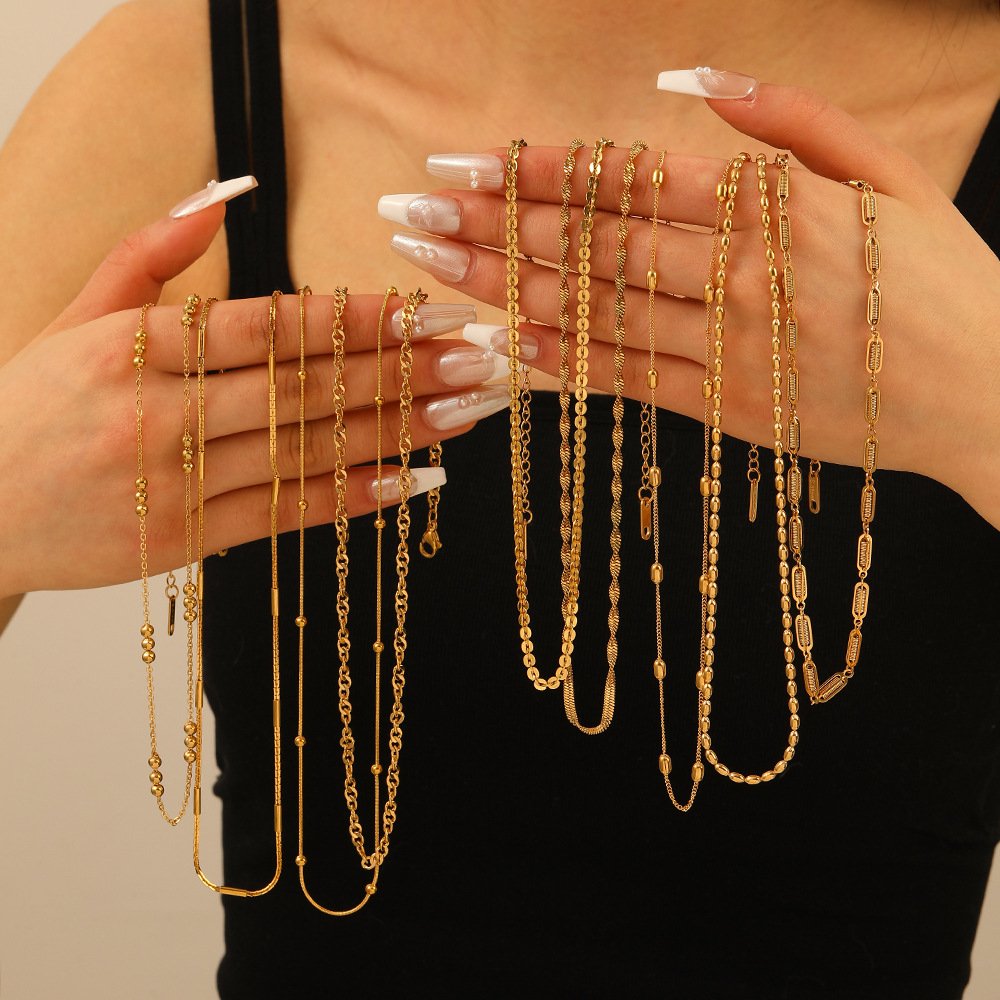
Stainless steel jewelry needs almost no special care: wipe it with a soft cloth, clean occasionally with mild soap and warm water, and store pieces separately to avoid scratching. The one exception is PVD-coated (gold/rose gold) pieces, which last longest — typically 3–5 years of color retention — when customers avoid harsh chemicals, chlorine, and abrasive cleaning tools.
Most “defective product” complaints on 304 and 316L stainless steel jewelry aren’t manufacturing issues — they’re care-instruction gaps. If your product page, packaging insert, or post-purchase email doesn’t tell customers what to do (and what not to do), you’ll absorb avoidable returns. Below is copy-ready guidance you can adapt directly.

Why Stainless Steel Needs So Little Maintenance
304 stainless steel — an alloy of roughly 18% chromium and 8% nickel — is inherently resistant to tarnish, corrosion, and everyday scratching, which is why it’s the industry-standard material for fashion jewelry worldwide. Unlike sterling silver or gold-filled pieces, it doesn’t require polishing cloths, anti-tarnish strips, or specialty cleaners.
For retailers, this is a selling point worth repeating on the product page itself: “no polishing required” and “cleans with soap and water” are two lines that directly reduce pre-purchase hesitation and post-purchase confusion. MFCHIC, a 304 stainless steel jewelry manufacturer with 16 years of export experience, builds its entire in-stock catalog — over 6,000,000 SKUs — around this low-maintenance property, since it’s the main reason stainless steel has replaced other base metals across Amazon, Etsy, and Shopify storefronts.
The trade-off customers should understand: low maintenance does not mean zero care. Skipping basic habits — wearing jewelry into a pool, storing pieces in a damp bathroom, tossing them loose in a bag — will shorten the life of any finish, including stainless steel.
Daily and Weekly Cleaning Instructions (Copy-Ready)
Give customers a simple, repeatable routine rather than a long list of rules. This is the version we recommend adapting for a packaging insert or FAQ page:
- Daily: Wipe with a soft, dry cloth after wear to remove oils and skin residue.
- Weekly (as needed): Clean with warm water and a mild, fragrance-free soap; use a soft-bristle brush (like a baby toothbrush) for detailed settings.
- Rinse and dry fully before storing — moisture left on the metal is the most common cause of dulling over time.
- Avoid: bleach, chlorine, ammonia-based cleaners, and abrasive polishing compounds — none are necessary and all can damage plated finishes.
This routine applies to both 304 and 316L stainless steel pieces. It takes under two minutes and requires nothing beyond what’s already in most households.

Storage Tips That Prevent the Most Common Damage
Scratching — not tarnishing — is the #1 preventable damage customers report, and it almost always happens during storage, not wear.
| Storage Mistake | What Happens | Better Practice |
|---|---|---|
| Tossing pieces loose in a drawer | Metal-on-metal scratching, tangled chains | Store each piece in its own pouch or compartment |
| Leaving jewelry in a humid bathroom | Accelerates finish dulling on plated pieces | Store in a dry area away from steam/humidity |
| Wearing rings/bracelets during workouts or cleaning | Micro-scratches from impact and chemical exposure | Remove before gym, housework, or swimming |
| Stacking necklaces without separation | Chain tangling, clasp stress | Hang chains or lay flat individually |
Recommending a simple jewelry box, a soft pouch, or even a lined drawer organizer as an add-on product is a low-effort upsell that also reduces the “arrived tangled/scratched” complaint category — a common driver of negative reviews for jewelry sellers on Amazon and Etsy.
Protecting PVD Gold and Rose Gold Coatings
PVD (Physical Vapor Deposition) plating is what gives stainless steel jewelry its 18K gold or rose gold finish without the cost of solid gold. Under normal wear, PVD coatings hold their color for 3–5 years — but that lifespan depends heavily on how the customer treats the piece, more so than with uncoated mirror-polish or brushed finishes.
The three biggest threats to PVD longevity are chlorine (pools/hot tubs), perfume or lotion applied directly onto the jewelry before it dries, and abrasive cleaning tools. None of these will damage the underlying 304 or 316L steel — but they can dull or wear the coating faster than expected, which is the single most common cause of “color faded” complaints on plated pieces.
What to tell customers about PVD pieces specifically:
- Apply perfume, lotion, and hairspray before putting jewelry on, not after
- Remove PVD pieces before swimming or hot tub use
- Clean with a dry or barely-damp soft cloth only — skip soap immersion for plated items when possible
- Store separately from uncoated pieces to avoid surface contact
What to Put in Packaging Inserts, Product Pages, and Post-Purchase Emails
Retailers who reduce jewelry return/complaint rates typically repeat the same core message three times across the customer journey — not just once at checkout:
- Product page (pre-purchase): One short line under materials — “304 stainless steel, tarnish-resistant, cleans with soap and water — no polishing needed.”
- Packaging insert (unboxing moment): A small printed card with the 4-bullet cleaning routine and the storage table above, condensed to 3–4 lines.
- Post-purchase email (day 3–5 after delivery): A short “care tips” email reinforcing PVD-specific guidance if the order included plated pieces — this is the highest-leverage touchpoint for preventing 30-60 day return-window complaints.
This three-touch approach costs almost nothing to implement and directly targets the complaint categories — tangling, scratching, faded plating — that are most preventable with instructions, not product changes.

When Care Instructions Won’t Solve the Problem
Some issues are legitimately material-related rather than a care-instruction gap — for example, a customer with a documented nickel sensitivity may need to be pointed toward a 316L option, or a buyer selling into a marine/pool-heavy market may want to stock 316L for its added corrosion resistance in those specific conditions. These are sourcing decisions, not customer-education fixes, and it’s worth being upfront with your own customers about the distinction rather than promising any stainless steel grade is completely maintenance-free in every environment.
FAQ
Q: How often should stainless steel jewelry be cleaned?
A: A quick wipe after each wear is enough for daily upkeep. A deeper clean with mild soap and warm water once every one to two weeks is sufficient for most everyday-wear pieces — no specialty jewelry cleaner is required.
Q: Can stainless steel jewelry go in water?
A: Yes, plain (non-plated) stainless steel jewelry is water-resistant and can handle everyday water exposure like handwashing or light rain without tarnishing. PVD-plated pieces should avoid pool, chlorine, and hot tub exposure to protect the coating’s color life.
Q: Why did my customer’s gold-plated stainless steel jewelry lose its color?
A: This is almost always a care-related issue, not a defect — chlorine exposure, perfume/lotion contact before drying, or abrasive cleaning shortens PVD coating life. Under normal care, PVD gold and rose gold finishes typically retain color for 3-5 years.
Q: Do customers need a special cleaning kit for stainless steel jewelry?
A: No. A soft cloth, mild soap, and warm water cover routine cleaning for both 304 and 316L stainless steel. Harsh chemical cleaners or abrasive polishing tools are unnecessary and can actually damage plated finishes.
Q: What’s the best way to store multiple stainless steel jewelry pieces?
A: Store each piece separately — in a lined jewelry box, individual pouches, or a compartmentalized organizer — to prevent scratching from metal-on-metal contact and to stop chains from tangling.
Q: Should retailers include care instructions in packaging?
A: Yes — a small printed care card in the packaging insert, reinforced by a short post-purchase email, is one of the lowest-cost ways to reduce “damaged,” “tarnished,” or “faded” complaint tickets industry-wide.
Q: Is 304 or 316L stainless steel easier to maintain?
A: Both grades follow the same basic care routine and require no polishing for everyday wear. 316L offers marginally superior resistance in prolonged saltwater or chlorine exposure, but for standard fashion-jewelry use, maintenance needs are essentially identical.
Next Step
Sourcing tarnish-resistant, low-maintenance stainless steel jewelry starts with the right supplier. MFCHIC, a 304 stainless steel jewelry manufacturer with 16 years of export experience and ISO 9001:2015-certified production, stocks a 6,000,000+ SKU catalog you can browse today — add your styles to the Inquiry Cart, and submit your inquiry for a Proforma Invoice within 1 business day.
👉 Browse the catalog: mfchic.com
📱 WhatsApp: +86 17727314167