
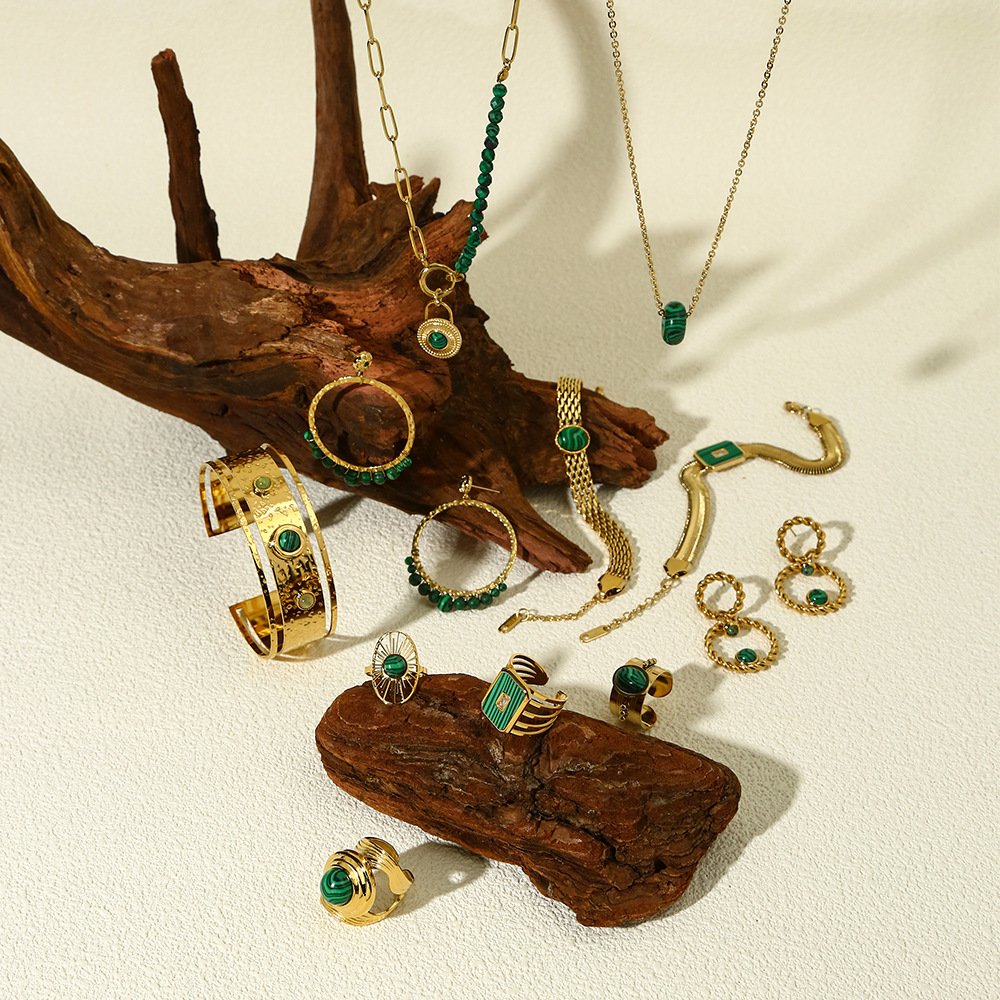
Direct Answer
Amazon jewelry sellers avoid the most common customer complaints — tarnishing, skin reactions, and fading plating — by sourcing 304 or 316L stainless steel with genuine PVD plating from a certified factory, rather than base metal with thin electroplating. The sourcing decision, not the listing copy, is what actually drives your return rate and review score.
If you’re selling jewelry on Amazon, your product reviews are the single biggest lever on conversion — and material quality is the single biggest lever on reviews. This guide covers what to look for when sourcing, and what to avoid.
Why Most Jewelry Complaints Are a Sourcing Problem, Not a Listing Problem
The most frequent 1–2 star reviews on Amazon jewelry listings cite tarnishing, skin discoloration/irritation, or plating that wears off within weeks. These aren’t photography or copywriting problems — they’re material and finishing problems that trace back to the factory.
Stainless steel jewelry, when sourced correctly, largely eliminates these complaint categories because the base material itself resists tarnish and corrosion, and doesn’t require ongoing polishing or special care.
The Sourcing Checklist
1. Confirm the Actual Grade
Ask specifically whether the material is 304 or 316L stainless steel — not generic “stainless steel” or “steel alloy,” which can be vague marketing language covering lower-quality alloys. 304 (18% chromium, 8% nickel) is the industry standard for fashion jewelry; 316L adds molybdenum for superior corrosion resistance in marine/chlorine conditions.
2. Ask How the Gold/Rose Gold Finish Is Applied
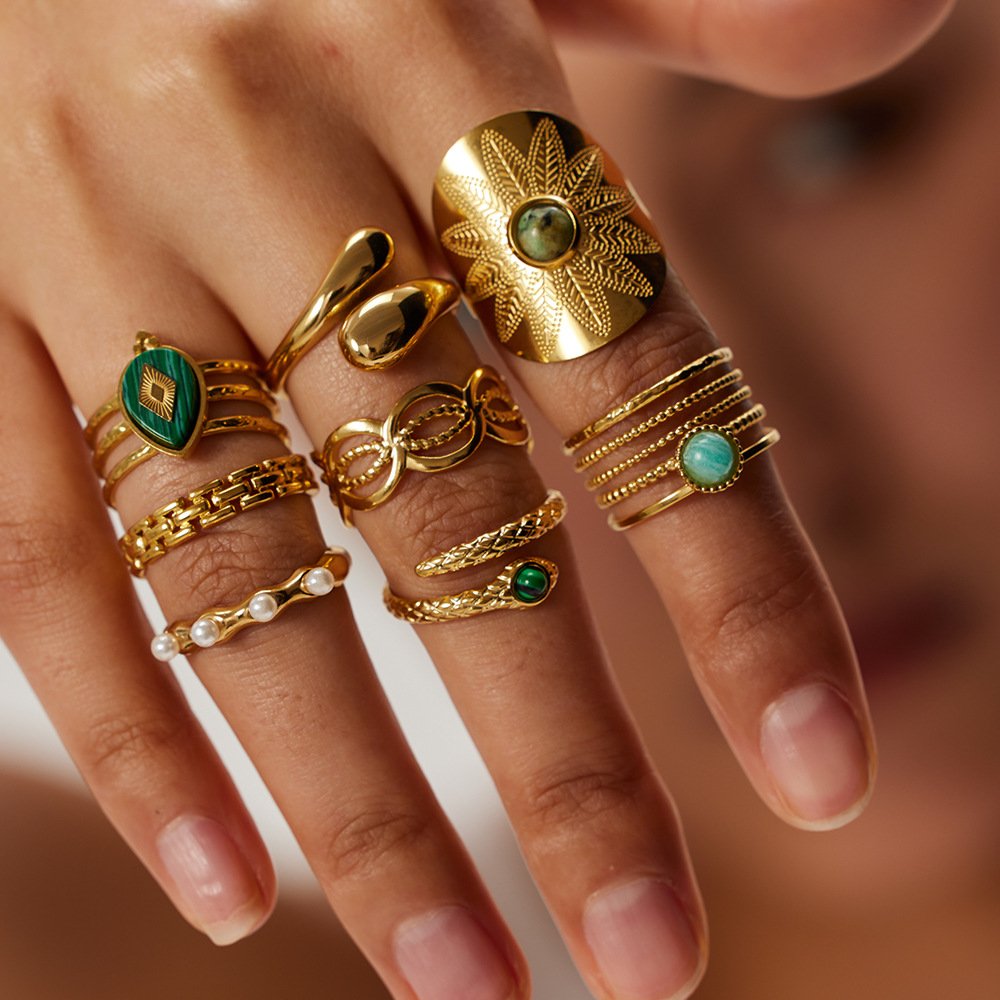
PVD (Physical Vapor Deposition) vacuum plating produces a finish that typically holds color for 1–2+ years. Traditional electroplating is thinner and commonly fades or flakes within months — a leading cause of “doesn’t look like the photos anymore” complaints.
3. Request Compliance Documentation
For EU and platform compliance purposes, ask whether the factory can provide REACH (EU Regulation (EC) No 1907/2006) and RoHS (EU Directive 2011/65/EU) compliance documentation. These are typically issued as PDF certificates per order, with a processing fee confirmed in your Proforma Invoice.
4. Check Factory Certification
ISO 9001:2015 certification indicates a documented quality management system — a reasonable proxy for consistent output across large production runs, which matters if you’re scaling a listing that needs to reorder thousands of units without a quality dip.
5. Test Before You Scale
Order a small batch (10 pieces per style, if your supplier supports low MOQ) and wear-test it yourself before committing to a full inventory run. Simulate normal wear conditions — water exposure, daily wear — over 2–4 weeks.
Material Comparison for Amazon Sellers
| Factor | 304 Stainless Steel | Base Metal + Electroplating |
|---|---|---|
| Tarnish resistance | Excellent | Poor — commonly tarnishes within weeks |
| Skin reaction risk | Low | Higher, especially with nickel-heavy base alloys |
| Plating durability | PVD holds 1–2+ years | Fades/flakes within months |
| Return rate impact | Lower | Higher |
| Cost | Competitive | Cheaper upfront, costlier in returns/reviews |
Sourcing Volume for a New Amazon Listing
Amazon sellers testing a new ASIN don’t need to commit to bulk inventory upfront. A low-MOQ supplier (10 pieces per style, in-stock) lets you validate demand and photograph real inventory before scaling to FBA-level quantities. Once a design proves out, reorder at whatever volume your sales velocity supports — no design or tooling lead time is required for in-stock catalog items.
If you eventually want a private-label/exclusive design, expect a separate MOQ tier: typically 300 pieces per design for custom 304 SS, or 500 pieces for 316L, with a 50% deposit and roughly 15–20 business days for sample production.
Shipping & Delivery Expectations
Set customer-facing delivery expectations conservatively. Standard international shipping to the US/EU via express courier (DHL/FedEx/UPS) typically runs 7–12 business days once goods leave the factory — plan your Amazon listing lead time and inventory buffer around this, especially before high-demand periods.
Shipping cost is calculated by weight; a common reference rate to the US/EU is around $38/kg, confirmed exactly in your Proforma Invoice based on actual order weight.

Compliance for EU Marketplace Sellers
If you sell into Amazon EU specifically, compliance documentation may be requested during account or listing audits. Confirm your supplier can provide REACH and RoHS compliance in PDF format — accepted for EU customs clearance and platform compliance review. Don’t wait until an audit request to find out your supplier can’t produce this.
Authority Signals to Verify Before Committing
- ISO 9001:2015 certified factory
- REACH (EC) No 1907/2006 and RoHS 2011/65/EU compliance available on request
- Established export history (18+ years, 3,000+ brands served is a reasonable benchmark)
- Daily production capacity sufficient to support reorder scaling (5,000+ pieces/day)
FAQ
Q: Why does my jewelry listing get tarnish complaints even though it’s marketed as “stainless steel”?
A: “Stainless steel” alone isn’t a guarantee — confirm the specific grade (304 or 316L) with your supplier, since some sellers use the term loosely for lower-quality alloys that don’t perform the same way.
Q: What’s the difference between PVD plating and regular gold plating for Amazon listings?
A: PVD (Physical Vapor Deposition) is a vacuum-applied coating that typically holds color for 1–2+ years, while traditional electroplating is thinner and often fades or flakes within months — a common driver of negative reviews.
Q: Do I need a certificate to sell stainless steel jewelry on Amazon?
A: Not always, but REACH and RoHS compliance documentation may be requested for EU marketplace listings or during compliance audits. It’s worth confirming your supplier can provide it before you need it.
Q: How small a batch can I order to test a new jewelry design before scaling to FBA volume?
A: With a low-MOQ supplier, you can typically test at 10 pieces per style before deciding whether to commit to larger inventory.
Q: How long does shipping take from a China-based jewelry supplier to the US?
A: Standard express courier shipping (DHL/FedEx/UPS) typically takes 7–12 business days to the US and EU once goods ship, though exact timing depends on the shipping method and destination.
Q: What should I do if a supplier can’t confirm the exact steel grade they use?
A: Treat that as a red flag. A reputable manufacturer should confirm the specific grade (304 vs. 316L) without hesitation and be able to provide compliance documentation on request.
Next Step
Source your next Amazon jewelry listing from a factory that can confirm grade, finish process, and compliance documentation upfront. Test at 10 pieces per style before scaling.
👉 Browse the catalog: mfchic.com
📱 WhatsApp: +86 17727314167